
BS 476 to EN 13501guide
Top 5 Things You Need to Know
If you work anywhere near fire doors in the UK, you'll have heard that BS 476 is on its way out, and is being replaced by EN 13501. For architectural hardware manufacturers like us, that's not a small administrative footnote or just a box to tick. It changes how our products get tested, classified and specified so we can provide assurance that our products meet compliance standards.
At Selectrite, we've spent decades building hardware that people trust to perform when it matters most. So we wanted to cut through the noise and give you a quick, honest rundown of what's actually changing, what isn't, and what you should be doing about it now. In this blog we share no jargon, no fear-mongering, just the facts, so the professionals who specify, install and maintain our products can have the information they need.
Here are the top 5 things you need to know and 3 next steps to help you prepare for the change.

1. BS 476 isn't disappearing overnight, but the clock is ticking
The UK Government has committed to a single, unified fire classification system, replacing the national BS 476 series with the European EN 13501 standard. This is being phased in rather than switched on overnight.
key dates:
March 2025: the first step. Reaction-to-fire and external roof exposure references were removed from Approved Document B.
2 September 2029: the certification deadline. This is when all remaining references to BS 476 (including BS 476-22, the part most relevant to fire doors) will be removed from Approved Document B entirely. From that date, BS 476 test evidence will no longer be valid for compliance, and EN 13501 becomes the sole recognised classification route in England.
So no, BS 476 doesn't vanish tomorrow, but it does have an expiry date. The five-year runway to 2029 exists specifically so the industry has time to retest, recertify and adjust supply chains without a cliff-edge disruption. It’s a good idea to not wait until 2028 to start that process.
Phasing out sensibly means manufacturers progressively moving product ranges over to EN 13501-2 classifications well ahead of the deadline, rather than scrambling for test slots in 2028. Talk to your suppliers (including us) about where products currently sit on that journey.
got a question about our products?
2. Why the change?
It's about consistency, not bureaucracy
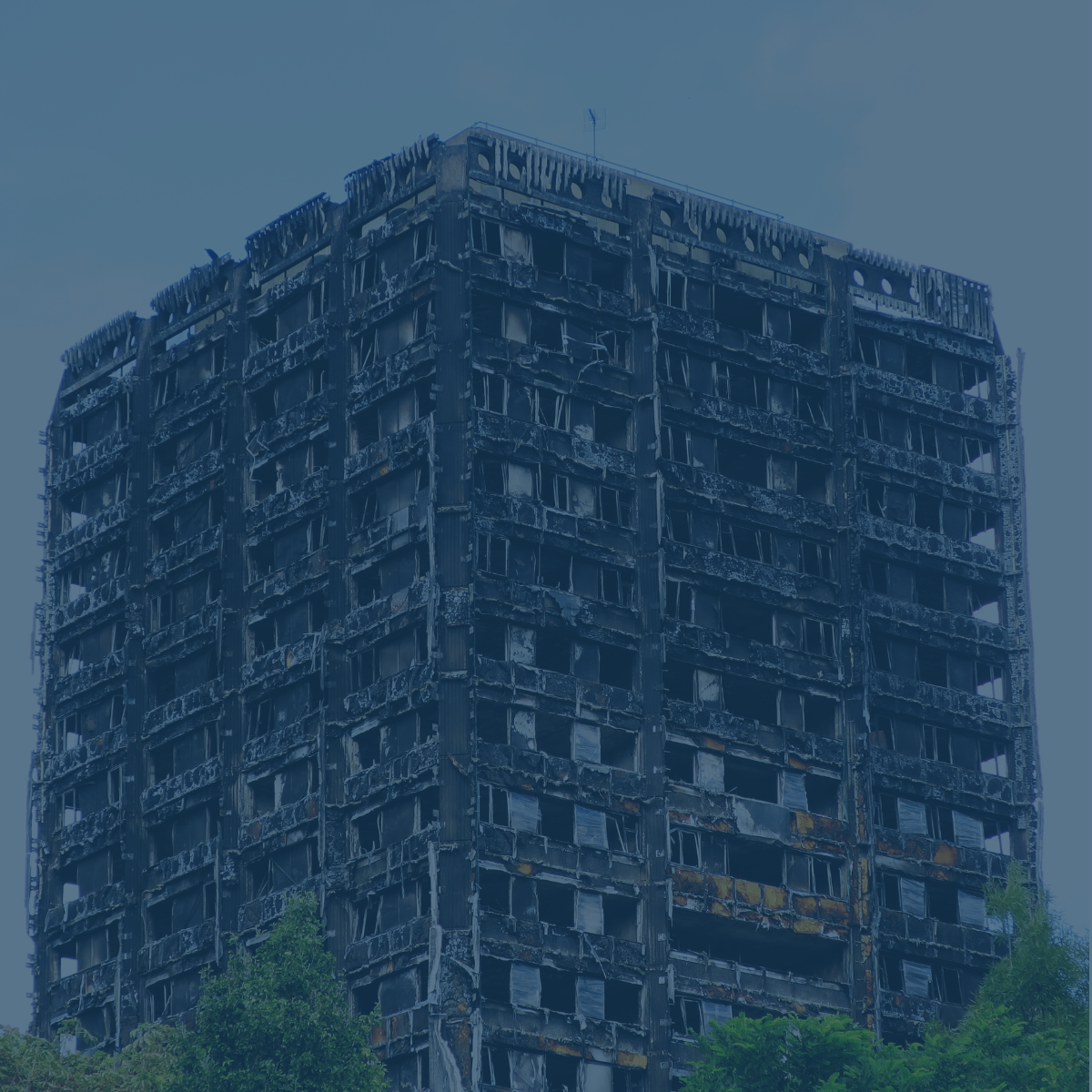
This shift didn't come out of nowhere. It's a direct response to the Hackitt Review following the Grenfell Tower tragedy, which highlighted inconsistencies and a lack of transparency in how building safety was tested and regulated across the UK.
EN 13501 is more rigorous, periodically reviewed, internationally recognised and crucially, it tests fire performance based on the way doors and hardware actually behave together as a system, rather than in isolation.
In short: it's a genuine attempt to close gaps that mattered, not red tape for red tape's sake. We'd rather have one robust, transparent system than two systems pulling in different directions.

3. Is EN 13501 mandatory? Yes from 2029, and for fire performance specifically
By 2 September 2029, for fire resistance classification under Approved Document B, EN 13501 will be mandatory in England. BS 476 results won't be accepted; you'll need direct test evidence to EN 1634-1 (the door assembly fire test), classified to EN 13501-2.
It's worth noting that EN 13501 itself doesn't mandate third-party certification schemes (like Certifire or BM TRADA Q-Mark). Strictly speaking, what Approved Document B requires is the test evidence itself. However, these schemes remain highly respected because they add an extra layer of ongoing assurance; surveillance audits, traceability and production consistency checks that specifiers and building owners have come to rely on.
At Selectrite, we’d always recommend treating third-party certification as best practice, even where it isn't the bare legal minimum.

4. If EN tests the whole door - how do you certify a component, like Selectrite’s Door Selector MK2?
This is the question we get asked most, so let's be direct about it.
EN 1634-1 does test fire doors as a complete assembly - leaf, frame, seals, glazing and hardware together, under furnace conditions and EN 13501-2 expresses the result for that whole system. That's a deliberate design choice: a door's fire performance is a product of how every part works together, not just how each part performs alone.
But that doesn't mean individual hardware components like Selectrite’s Door Selector MK2 are tested in a vacuum, or untested at all. Hardware items that contribute to fire/smoke performance have their own harmonised EN product standards that sit underneath the whole-door test:
BS EN 1154 - controlled door closing devices
BS EN 1155 - electrically powered hold-open devices
BS EN 1158 - door coordinator devices (closely relevant to door selectors, which manage the closing order of leaves on double doors)
These standards define the performance and test requirements a component must meet to be classified as suitable for use on a fire/smoke door assembly in the first place. A door selector that meets BS EN 1158 requirements can then be included within a tested door assembly, and its performance is captured within that assembly's EN 13501-2 classification. This is typically supported by an Extended Application (EXAP) report, which lets test results apply across a defined range of door configurations without re-testing every single variation.
In practice, this means we test and certify the Door Selector MK2 to its own relevant EN hardware standard, and we will work with door manufacturers and test houses to ensure it is represented correctly within whole-assembly fire test evidence and EXAP scope. Both layers matter, and neither replaces the other.

5. Will Declarations of Performance and Fit for Purpose certificates still be required?
Yes. A Declaration of Performance (DoP) is a legal requirement for any construction product covered by a harmonised or designated standard, including fire door hardware.
Without a DoP, CE or UKCA marking is invalid, regardless of which classification standard sits behind it.
So DoPs aren't going anywhere and Fit for Purpose certificates and other supporting documentation remain just as relevant. While the marking landscape has had a bumpy few years it has settled into a more workable position. As ever, we'd recommend checking the current position with your certification body before placing significant orders, as this is an area that has shifted before and could shift again.
Three next steps you can take to prepare for the change
-
Identify which products and projects in your pipeline currently rely on BS 476 evidence, and flag anything with a long project timeline that could still be live near or after 2029.
-
Ask where their EN 13501-2 classification and EXAP coverage currently stands for the specific products you specify - don't assume “EN-ready” means the same thing for every manufacturer or every product range.
-
Use the runway to 2029 deliberately. Re-certifying hardware and revalidating door assemblies takes real test-house time and lead time - start conversations and paperwork well before you need the certificates in hand.
And finally, is this just a UK and Europe thing?
EN 13501 is a European classification standard, recognised across EU and EEA member states, so manufacturers and specifiers working internationally within Europe will already be familiar with it. The UK's move brings Approved Document B into alignment with that wider European framework rather than creating something new.
Outside Europe, the picture is more varied. Many territories that have historically referenced British Standards. For example, across the Middle East, parts of Asia, and former Commonwealth markets have not been given a 2029 deadline, because that deadline is specific to England's Building Regulations. Each territory sets its own building regulations and timelines, and some may continue to recognise BS 476 evidence, adopt EN 13501 on their own schedule, or run both in parallel for longer. If you're specifying or supplying internationally, the right approach is always to check the locally applicable building regulations for that territory directly, rather than assuming the English timeline applies.
As a manufacturer with international reach, this is exactly the kind of detail we help customers navigate project by project - because "compliant" only means something in the context of where the building actually is.
We trust this has been a useful summary of the changes and helps you to navigate them with confidence and clarity. If you have questions about a project needing EN 13501 classification for our hardware range, or want to know where a specific product stands in its transition, get in touch with our technical team today.
We're a family business who pride ourselves on ensuring the highest standards of integrity and compliance, and we’re happy to help you navigate these changes so you can be ahead of the curve.